

Discover essential organizational routines for busy nurses working rotating shifts. Learn daily planning systems, time management strategies, and productivity habits to balance your nursing schedule effectively.
Introduction
It’s 6:45 AM on a Monday, and Sarah, an experienced ICU nurse, is already reviewing her patient assignments for the upcoming 12-hour shift. Her scrubs are neatly laid out, her nurse’s “brain” (shift planner) is printed and ready, and she has healthy meals packed for the day. Despite the unpredictable nature of critical care nursing, Sarah feels confident and prepared. Her secret? A solid set of organizational routines that has evolved over her 10-year nursing career.
As a Registered General Nurse with a decade of clinical experience across Emergency, Pediatric, Intensive Care, and General Ward settings, I’ve witnessed firsthand how the right organizational routines can transform a chaotic workday into a manageable one. Time management encompasses goal-setting skills, prioritization of goals and activities, operational planning, delegation, and communication management, according to PubMed Central, all of which are essential for nurses navigating the complex healthcare environment.
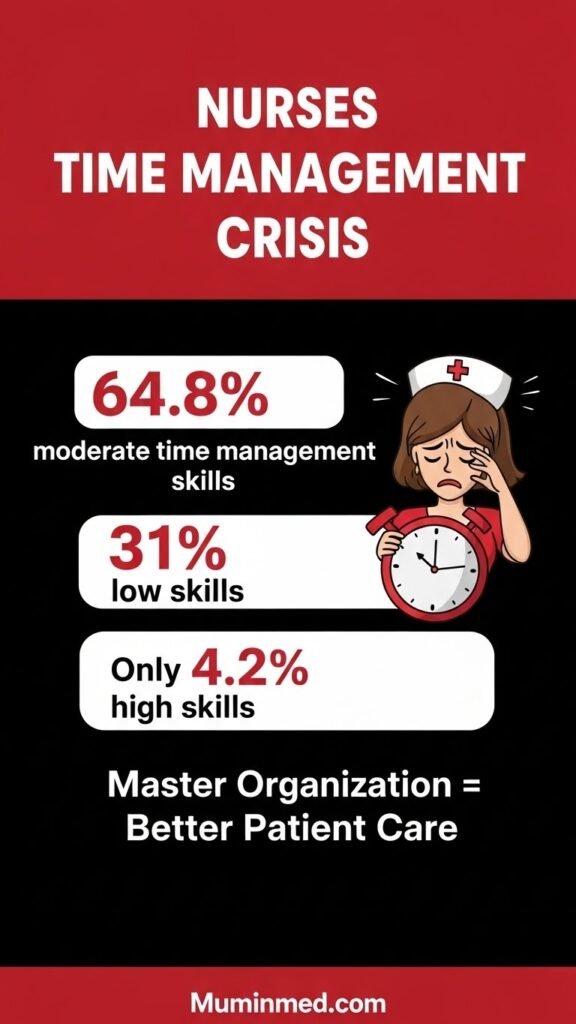
Recent research reveals a concerning reality: approximately 64.8% of nurses demonstrate only moderate time management skills, while 31.0% have low time management abilities, with just 4.2% exhibiting high time management skills, according to ResearchGate. This gap in organizational capabilities directly impacts not only nurse well-being but also patient care quality.
In this comprehensive guide, I’ll share evidence-based organizational routines that help nurses stay on top of demanding schedules, maintain work-life balance, and provide exceptional patient care. Whether you work rotating shifts, 12-hour days, or night shifts, you’ll discover practical strategies drawn from both research and real-world nursing experience.
Disclosure: This article contains affiliate links. As an Amazon Associate and affiliate partner of various medical device retailers, Muminmed.com earns from qualifying purchases. This comes at no additional cost to you and helps support our work in providing evidence-based health information. All recommendations are based on clinical experience and research.
Table of Contents
Understanding Why Organizational Routines Matter for Nurses
The Unique Challenges Nurses Face
Nursing presents distinctive organizational challenges that few other professions encounter simultaneously. Organizations have simplified their internal operations and flattened their organizational structures in an effort to increase productivity and cut expenses, making successful time management skills particularly crucial for nurses in recently restructured healthcare organizations, according to BMC Nursing.
Consider the daily reality: nurses must coordinate care for multiple patients, each with different medication schedules, treatment plans, and levels of acuity. Add unexpected emergencies, staff shortages, and documentation requirements, and you have a profession that demands exceptional organizational skills.
The Real Cost of Poor Organization
When nurses lack effective organizational systems, the consequences extend far beyond personal stress. Poor time management has been associated with poor quality of work, low productivity, negative influence on the career path, and high levels of stress, according to PubMed. From my experience in the Emergency Room and ICU, I’ve seen how disorganization can lead to medication errors, missed interventions, and compromised patient safety.
Moreover, the personal toll is significant. Disorganized nurses are more likely to skip breaks, work through lunch, and take work stress home with them—all recipes for burnout in an already demanding profession.
The Benefits of Structured Routines
Research demonstrates that nurses who implement structured organizational routines experience multiple benefits. Good time management, such as setting goals and priorities, as well as planning and delegating tasks, can facilitate productivity and success, contributing to work effectiveness, maintaining balance, and job satisfaction, according to PubMed.
From a clinical perspective, organized nurses provide better patient care. They can anticipate needs, prevent complications, and respond more effectively to emergencies because they’re not constantly playing catch-up with basic tasks.
The Science Behind Time Management in Healthcare
Core Components of Effective Time Management
Research identifies three broad categories for time management strategies: goal setting and priorities, planning behaviors, and monitoring behaviors, with delegating tasks identified as a fundamental strategy for nurse managers and bedside nurses alike.
Through my years in various clinical settings, I’ve found these components work synergistically. You can’t effectively prioritize without first setting clear goals, and monitoring your progress helps refine your planning for future shifts.
The Impact on Patient Outcomes
Time management is a set of behaviors for the optimal organization and division of time that leads to better use of time, increased productivity, and increases the likelihood of achieving predetermined goals, according to PubMed Central. In nursing, those predetermined goals directly relate to patient safety and quality care.
During my time in Pediatrics and ICU, I observed that nurses with strong organizational routines had fewer medication administration errors, better documentation completion rates, and more positive patient satisfaction scores.
Why Traditional Time Management Doesn’t Always Work for Nurses
A routine can be considered something of a contradiction in nursing because illness and injury follow no schedules, so nurses must be flexible enough to abandon routine as needed to attend to individual patients’ needs as they arise, according to Denver College of Nursing.
This is the paradox of nursing organization: we need routines to function effectively, yet we must remain flexible enough to respond to emergencies. The key is developing routines that provide structure without rigidity—frameworks that guide your day while accommodating the unexpected.
Pre-Shift Organizational Routines: Setting Yourself Up for Success
The Power of Arriving Early
Getting to work 20-30 minutes early is a temporary tip for new nurses that helps them feel organized and ready for whatever comes their way, though you can’t clock in. Even as an experienced nurse, I still arrive 15 minutes before my shift. This brief window allows me to transition mentally from home to work mode, review patient assignments, and organize my workspace before the chaos begins.
During this pre-shift time, I recommend:
Reviewing the Patient Census: Check the unit board to see which patients you’ll be caring for. Note any new admissions, discharges, or transfers that might affect your workload.
Preparing Your Workspace: Organize your nursing station or work area. Ensure you have adequate supplies, functioning equipment, and easy access to reference materials.
Mental Preparation: Take a few deep breaths and set your intentions for the shift. This simple mindfulness practice helps transition from your personal life to your professional role.
Creating an Effective Nurse’s “Brain”
An hourly nursing shift planner, also known as a nurse’s “brain,” is what keeps nurses on track throughout a shift, and when a nurse loses their “brain,” it causes sheer panic.
What to Include in Your Brain Sheet:
Your organizational sheet should contain all essential information for quick reference. Based on research and my clinical experience, an effective brain includes:
Some nurses use a four-color ballpoint pen to color-code everything: Green for information from the patient’s chart, Blue for what you get at shift report, Red for what happens during your shift, including labs and vital signs, and Black for any orders during the shift.
Essential Brain Sheet Components:
- Patient identifying information (room number, name, age, diagnosis)
- Allergies and diet orders
- Code status and isolation precautions
- Scheduled medication times
- Laboratory test schedules and expected result times
- Planned procedures or treatments
- Vital sign parameters and frequency
- IV fluids and rates
- Drains, tubes, and catheter information
- Important family communication notes
You can find customizable brain sheets online or create your own using Microsoft Word or Apple Pages. The key is consistency—using the same format every shift helps you locate information quickly during critical moments.
The Master Timeline Strategy
Planning your day involves laying out your timeline by writing when meds are due on the back of each patient’s reporting sheet, doing the same for lab results and scheduled procedures, then combining them on the back of the last patient’s reporting sheet to create a Master Timeline for the shift.
This comprehensive timeline becomes your roadmap for the shift. When a colleague asks, “Can you help with this patient?” you can quickly reference your timeline to see when you have a natural break in your workload.
Shift Handoff Best Practices
Experienced nurses suggest reviewing your orders during or immediately after the shift change handoff, discussing any medications, dosing, and their administration schedules with the outgoing nurse.
Effective Handoff Questions to Ask:
- What was the patient’s overnight/previous shift like?
- Are there any behavioral or safety concerns?
- Has the family been updated, and do they have specific questions?
- Are there pending laboratory results or imaging studies?
- What tasks from the previous shift remain incomplete?
- Are there any equipment issues or supply shortages for this patient?
During-Shift Organization Strategies: Staying on Track When Chaos Strikes
Prioritization Frameworks for Busy Shifts
Prioritization is the place to begin with any list of routine tasks, as certain duties must be performed regularly and various tasks must be attended to reliably, according to Denver College of Nursing.
The ABC Prioritization Method:
A-Priority Tasks (Life-threatening or time-sensitive):
- Unstable vital signs
- Acute pain management
- Critical medication administration
- Emergency responses
- Immediate patient safety concerns
B-Priority Tasks (Important but not immediately life-threatening):
- Routine medication administration
- Scheduled treatments and assessments
- Patient education
- Discharge planning
- Non-urgent physician communications
C-Priority Tasks (Can be delegated or rescheduled if necessary):
- Routine documentation
- Equipment restocking
- General patient comfort measures
- Non-urgent family communications
Throughout my decade in nursing, I’ve learned that priorities can shift rapidly. A C-priority task can become an A-priority in seconds if a patient’s condition changes.
Managing Interruptions and Distractions
According to a literature review of over 20 studies on healthcare distractions, nurses encounter up to 13 interruptions per hour, with the most common distractions coming from patients, families, and staff, along with equipment failure and lack of supplies.
Strategies to Minimize Disruption Impact:
 Use your brain sheet to quickly reorient yourself after interruptions. The visual reference helps you remember exactly where you were in a task sequence.
- Implement the “parking lot” technique: keep a small notepad for jotting down non-urgent requests that arise during critical tasks, so you can address them later without forgetting.
- Communicate your task priority to colleagues. A simple “I’m administering medications right now, but I can help you in 15 minutes” sets appropriate boundaries while maintaining teamwork.
The Art of Effective Delegation
Delegate early in the shift so your team members can plan too, and explain clearly what you’re asking without assuming they know.
What You Can Typically Delegate:
To Unlicensed Assistive Personnel (UAP/CNA/PCT):
Vital signs and intake/output monitoring
Emptying Foley catheters
Activities of daily living (bathing, toileting, ambulating, positioning)
Meal assistance
To Licensed Practical Nurses (LPN/LVN):
Administering routine patient medications
Continuing assessments after the RN initiates
Inserting Foley catheters
Possible IV maintenance (depending on state regulations)
Any CNA tasks
When delegating, specificity matters. Instead of saying “Monitor this patient’s blood pressure,” try “Mr. Johnson in room 215 needs his blood pressure checked every two hours. His baseline is around 130/80, so please report to me immediately if it goes above 160/100 or below 100/60.”
Clustering Care for Efficiency
Starting a shift by grouping tasks according to urgency makes it easier to prioritize and cluster care for each patient, according to Regis College.
Hourly Rounding Protocol:
Planned hourly patient visits help nurses ensure their patients are safe, each patient’s required routine care has been performed, and each patient’s comfort has been checked, helping nurses control their time by preemptively addressing patients’ needs.
During hourly rounds, address the “Five P’s”:
Pain: Assess and manage discomfort
Potty: Toileting needs
Position: Repositioning for comfort and pressure ulcer prevention
Periphery: Ensure call lights, water, and personal items are within reach
Pump: Check IV lines, pumps, and infusions
This proactive approach reduces call light usage and allows you to identify potential problems before they become emergencies.
Documentation Strategies That Save Time
Most shifts involve charting between patient care activities, but it’s a good idea to plan documentation time into your schedule, such as setting aside time to start charting once you’ve given all beginning-of-shift medications and completed assessments, according to the Anursenamedcourtney.
Efficient Documentation Tips:
- Chart as you go when possible, using mobile workstations or tablets at the bedside.
- Use standard phrases and templates for routine assessments to save time while maintaining accuracy.
- Block out 15-minute documentation periods after major task clusters (morning assessments, medication passes, lunch).
- Never chart something you didn’t do or see, regardless of time pressure. This ethical principle is non-negotiable.
Medication Administration Organization
Patients in pain always want to know what time their next PRN pain medication can be given, and if they don’t have this information easily accessible, they will be calling nonstop.
PRN Medication Management:
At the beginning of each shift, create a plan with patients who have PRN pain medications. Write the next available administration time on their whiteboard and on your brain sheet. This simple step dramatically reduces interruptions and improves patient satisfaction.
Many nurses leave extra space in hour blocks when medications are typically busiest, like 0900 and 2100, so they can write out every medication, even if there are many.
Post-Shift Recovery Routines: Decompressing and Preparing for Tomorrow
The Importance of Transitional Rituals
After a demanding 12-hour shift, the way you transition from work to home significantly impacts your ability to recover and maintain work-life balance. If your commute is lengthy, view it as a valuable opportunity to unwind and smoothly transition between home and work life by listening to calming music, engaging with an audiobook, or practicing deep breathing exercises.
My Post-Shift Routine:
Immediate Post-Shift (First 15 minutes after clocking out):
Complete a brief mental review of the shift. What went well? What could improve tomorrow?
Physically remove your work badge and change out of scrubs if possible before leaving the facility.
Take three deep breaths in your car before driving home, consciously releasing the shift’s stress.
Transition Time (Commute home):
Listen to music, podcasts, or audiobooks unrelated to nursing.
Avoid rehashing difficult cases unless processing them helps you decompress.
Use this time to shift your identity from “Nurse” to your personal roles.
Physical Recovery Strategies
It might seem counterintuitive, but a workout can do wonders to help you unwind after a long workday, according to Nevada State University. Light exercise after a shift helps reduce muscle tension and process stress hormones.
Post-Shift Physical Care:
- Gentle stretching to counteract the physical demands of nursing
- Short walks to decompress mentally while moving physically
- Warm showers or baths to relax tense muscles
- Compression sock removal and leg elevation if working long shifts
- Foot care, including massage and proper footwear rotation
Preparing for Your Next Shift
Using days off strategically to catch up on routine home tasks like meal prep, washing scrubs separately from other items, and having your nursing bag packed and waiting by the door makes getting out much easier, according to the American Nurses Association.
End-of-Day Preparation Checklist:
- Lay out tomorrow’s scrubs and undergarments
- Pack your nurse bag with snacks, a water bottle, and essentials.
- Prepare and pack tomorrow’s meals.
- Review your schedule for the upcoming shift.
- Set multiple alarms if you have trouble waking.
- Prepare any personal items needed for post-shift activities.
Weekly Planning Systems for Rotating Shift Workers
Managing the Rotating Schedule Challenge
Nurses will be better able to adjust to work times when they have some ability to control their schedules, as some nurses will select schedules that take their own physical and mental capacity for work into account, as well as their social and family demands, according to the CDC.
Understanding Common Nursing Schedules:
Common nursing schedules include three 12-hour shifts per week, providing 36 hours weekly, five eight-hour shifts typical in private practices and outpatient settings, and four ten-hour shifts offering a three-day weekend, according to the American Nurses Association.
Each schedule type requires different organizational approaches. Three 12-hour shifts demand intense focus on recovery between shifts, while five eight-hour shifts require consistent daily routines similar to traditional employment.
Weekly Planning Template for Nurses
Sunday (Primary Planning Day):
- Review the upcoming week’s work schedule
- Meal prep for all work days
- Complete household tasks (laundry, cleaning, errands)
- Prepare work bags for the week.
- Schedule any appointments around work commitments.
- Review personal goals and self-care needs.
Work Days:
Follow pre-shift, during-shift, and post-shift routines.
Minimize additional commitments
Prioritize sleep and nutrition.
Quick household maintenance only
First Day Off After Consecutive Shifts:
- Prioritize rest and recovery
- Light household tasks only
- Gentle exercise or stretching
- Social connections, if energy permits
Additional Days Off:
- Personal appointments and errands
- Quality time with family and friends
- Hobbies and creative pursuits
- Preparation for the next work stretch
Sleep Schedule Management for Shift Workers
Quality sleep is the foundation of a successful night shift routine, with recommendations to avoid working more than three consecutive night shifts to reduce cumulative fatigue, according to Nurse.com.
Optimizing Sleep Around Shifts:
Going to bed and waking up at the same time every day is recommended, as studies have shown that sleeping in on the weekend does not make up for sleep deficits during the week.
Sleep Hygiene for Shift Workers:
- Blackout curtains or eye masks for daytime sleep
- White noise machines or earplugs to block daytime sounds
- Cool room temperature (60-67°F or 15-19°C) for optimal sleep
- Avoid caffeine 4-6 hours before planned sleep time.
- Limit screen time one hour before bed.
- Establish a consistent bedtime routine regardless of shift.
Home Organization Strategies for Nurses
Creating a Command Center
Establishing a dedicated space in your home for a nursing-related organization dramatically improves efficiency and reduces morning stress.
Essential Command Center Components:
- Wall calendar showing work schedule, appointments, and family commitments
- Key hooks for work badge, locker key, and car keys
- Charging station for phone, fitness tracker, and other devices
- Inbox for mail, bills, and paperwork requiring attention
- Bulletin board for important reminders and schedules
- Basket for items that need to go to work (library books to return, gifts for colleagues, etc.)
Scrub and Uniform Organization
Efficient Laundry System:
Washing your scrubs separately from other items is recommended, and tackling this on your day off lets you clean them all at once.
- Designate a specific hamper for work clothes, separate from personal laundry.
- Wash scrubs in hot water with hospital-grade detergent.
- Hang or fold immediately to prevent wrinkles.
- Maintain a rotation of at least 5-7 sets of scrubs.
- Keep a backup set at work for emergencies
The Nursing Bag Essentials
A well-organized nursing bag is your mobile office. Keep it packed and ready to grab on your way out the door.
What to Keep in Your Nursing Bag:
- Stethoscope and other personal equipment
- Multiple pens (including your favorite four-color pen)
- Small notebook or sticky notes
- Personal medications and first aid supplies
- Phone charger and portable battery
- Healthy snacks (protein bars, nuts, trail mix)
- Reusable water bottle
- Hand lotion and lip balm
- Feminine hygiene products
- Extra hair ties and bobby pins
- Small sewing kit for uniform emergencies
- Breath mints or gum
- Headphones for breaks
Meal Prep and Nutrition Planning for Healthcare Professionals
Why Meal Prep Matters for Nurses
Meal prepping and nutritional planning are essential for nurses working irregular hours, as fatigue and limited access to healthy foods during overnight hours can lead to poor dietary choices that impact energy, focus, and long-term health, according to Nurse.com.
During my years in the Emergency Room, I witnessed countless nurses survive on vending machine snacks and cafeteria pizza. While convenient, this approach led to energy crashes, weight gain, and increased stress levels. Structured meal preparation transformed not only my eating habits but also my overall job performance and well-being.
The Science of Nutrition for Shift Workers
Night shifts disrupt the body’s circadian rhythms, which also regulate digestion and metabolism, and eating at night when the body is less insulin-sensitive increases the risk for weight gain, insulin resistance, and gastrointestinal discomfort.
Macro Nutrient Distribution for Nurses:
Registered dieticians recommend that adults get 20-30% of their daily calories from fats, 30% from proteins, and 40-50% from carbohydrates, though these recommendations can vary for those with unique dietary needs.
Essential Micronutrients for Nurses:
- Iron: Supports energy production and oxygen transport
- B-Complex Vitamins: Crucial for stress management and energy metabolism
- Vitamin D: Important for bone health and immune function
- Magnesium: Aids in muscle relaxation and sleep quality
- Omega-3 Fatty Acids: Reduce inflammation and support brain function
- Vitamin C: Boosts the immune system and stress resilience
Weekly Meal Prep Strategy
Meal prepping requires scheduling a specific day each week for planning, shopping, and preparing meals, staying organized by labeling containers with the meal and day to avoid confusion, according to Daily Nurse.
Sunday Meal Prep Session (2-3 hours):
Phase 1: Planning (15 minutes)
Choose 4-5 main courses and 2-3 side dishes for the week.
Create a detailed grocery list organized by store section.
Check pantry staples and spices.
Phase 2: Shopping (45 minutes)
Shop efficiently using your organized list.
Consider online grocery ordering for time savings.
Focus on nutrient-dense, whole foods.
Phase 3: Preparation (90-120 minutes)
Use a slow cooker or instant pot to cook large portions of proteins like chicken, turkey, or beans, and roast a big tray of vegetables that can be used in different dishes throughout the week.
Cook all proteins at once
Prepare grain bases (brown rice, quinoa, pasta)
Chop vegetables for the week.
Assemble meals in individual containers.
Prepare grab-and-go snacks
Label everything with contents and date
Nurse-Friendly Meal Ideas
Breakfast Options (Quick and portable):
Overnight oats with protein powder, berries, and nuts
Egg muffin cups with vegetables and cheese
Greek yogurt parfaits with granola and fruit
Whole-grain toast with avocado and hard-boiled eggs
Protein smoothie bags (pre-portioned, just add liquid)
Lunch and Dinner Options (Balanced and satisfying):
Mediterranean Quinoa Bowl: Grilled chicken, quinoa, cucumbers, tomatoes, olives, feta cheese, and tzatziki sauce – provides balanced protein, healthy fats, and complex carbohydrates
Turkey and Black Bean Stuffed Peppers: Ground turkey with quinoa, black beans, spinach, and tomatoes in bell peppers – high in lean protein and fiber
Sheet Pan Salmon with Roasted Vegetables: Baked salmon with mixed vegetables and quinoa – an excellent source of omega-3 fatty acids
Black Bean and Brown Rice Bowls: Brown rice, black beans, corn, avocado, salsa, and cilantro – high in fiber and healthy fats
Chicken and Vegetable Stir-Fry: Lean chicken with colorful vegetables over brown rice – quick reheating and nutrient-dense
Snack Strategy for Long Shifts
Snacks high in sugar and processed flour might ultimately do more harm than good, so consider high-protein snacks such as nuts and seeds, along with packaged protein bars or drinks, according to Nevada State University.
Healthy Shift Snacks:
Mixed nuts and dried fruit
String cheese or cheese cubes
Hard-boiled eggs
Apple slices with almond butter
Hummus with vegetable sticks
Protein bars (look for 10g+ protein, less than 10g sugar)
Greek yogurt cups
Trail mix (homemade to control sugar content)
Hydration Strategies
Proper hydration is key for any nurse to stay energized throughout a 12-hour shift, with experts recommending at least eight glasses or roughly 64 ounces of water each day, according to Nevada State University.
Staying Hydrated at Work:
Carry a large reusable water bottle (32-40 oz capacity)
Set hourly reminders to drink water.
Add fruit or herbal tea for variety without sugar.
Limit caffeine to the first half of the shift to avoid sleep disruption.n
Track intake with markers on your water bottle
Keep electrolyte packets for particularly demanding shifts.
Digital Tools and Apps That Enhance Nurse Productivity
Scheduling and Shift Management Apps
Nursegrid is the number one nurse app that helps you take control of your calendar, manage shifts, and stay organized all in one place, designed specifically for nurses with color-coded, career-boosting features, Nursegrid.
Top Scheduling Apps for Nurses:
Nursegrid: Free shift calendar specifically designed for nurses with shift swap features and team communication tools. Available for iOS and Android.
NurseTasks: Productivity app designed specifically for nurse workflows with color-coded reminders, push notifications, and templates created by real nurses. Features task grouping by patient or shift.
Google Calendar: Free, syncs across devices, allows color-coding of shifts, and integrates with other Google services. Excellent for managing both work and personal schedules.
MyStudyLife: Free study planner that also works well for managing continuing education requirements, certification renewals, and professional development goals.
Organization and Task Management Tools
Brain Sheet Apps:
NurseTasks was designed specifically for the unique workflow of nurses and nursing students to improve organization, time management, and productivity skills with multiple options to group tasks by patient or by shift, Nursetasks.
Notion: Customizable workspace for creating digital brain sheets, procedure checklists, and personal knowledge bases. Particularly useful for organizing clinical references and creating template-based notes.
Evernote: Excellent for storing reference materials, protocol quick-guides, and personal study notes. The search function helps retrieve information quickly during shifts.
GoodNotes (iPad): Digital note-taking app popular among nurses who use tablets, allowing handwritten notes on digital planners and documents.
Health and Wellness Tracking Apps
Self-Care and Stress Management:
Headspace or Calm: Meditation and mindfulness apps offering short sessions perfect for pre-shift centering or post-shift decompression.
MyFitnessPal: A Comprehensive nutrition tracking app useful for meal planning and ensuring adequate nutrient intake despite irregular schedules.
Sleep Cycle: Smart alarm app that tracks sleep patterns and wakes you during optimal sleep phases, particularly valuable for shift workers.
Forest: A Gamified productivity app that helps maintain focus by growing virtual trees while you work distraction-free.
Clinical Reference Apps
Medication and Clinical Resources:
Epocrates: Drug reference app with dosing, interactions, and pill identification. Essential for medication administration safety.
Medscape: Free clinical reference with disease information, drug interaction checker, and medical calculators.
Calculate by QxMD: Medical calculator with over 500 clinical equations and decision support tools.
UpToDate: Comprehensive evidence-based clinical resource (subscription required, often provided by employers).
Self-Care Routines That Prevent Burnout
Understanding Burnout in Nursing
In the Nurse.com 2024 Nurse Salary and Work-Life Report, 54% of nurses reported experiencing prolonged stress, and 59% of nurses reported feeling burned out, which adversely affects nurses’ well-being and compromises patient care.
Throughout my decade in nursing, I’ve witnessed talented colleagues leave the profession due to burnout. What I’ve learned is that burnout isn’t inevitable—it’s often the result of chronically neglecting self-care in favor of work demands.
Recognizing Burnout Warning Signs:
- Chronic exhaustion that doesn’t improve with rest
- Cynicism or detachment from patients and colleagues
- Reduced professional efficacy and productivity
- Increased irritability and mood swings
- Physical symptoms (headaches, gastrointestinal issues, frequent illness)
- Difficulty sleeping despite being exhausted
- Decreased empathy and compassion
- Thoughts of leaving nursing
Physical Self-Care Routines
Regular physical activity is crucial for maintaining both physical and mental health, and even amid busy schedules, nurses can incorporate simple exercises such as stretching, walking, or brief workouts into their daily routines.
Weekly Exercise Goals for Nurses:
Aim for 150 minutes of moderate-intensity aerobic activity weekly
Include strength training exercises 2-3 times per week
Incorporate flexibility work (yoga or stretching) 3-4 times weekly.
Take movement breaks during shifts when possible.
Walk during breaks rather than sitting in the break room.
Exercise Adaptations for Shift Workers:
Schedule exercise during your most alert hours
Start with 10-15 minute sessions, if longer workouts feel overwhelming.
Choose activities you genuinely enjoy to maintain consistency.
Exercise with friends or colleagues for accountability
Focus on exercises that prevent nursing-related injuries (shoulder shrugs, core strengthening, leg exercises)
Mental and Emotional Self-Care
Mindfulness meditation involves paying deliberate attention to the present moment without judgment, allowing individuals to cultivate a sense of calm and centeredness amidst the chaos of their surroundings.
Mindfulness Practices for Nurses:
5-Minute Breathing Exercise:
Engaging in deep breathing can be an effective way to reduce stress and anxiety while improving lung function and blood pressure, with the benefit that breathing techniques can be used at any time, anywhere.
Find a quiet space (even a bathroom stall works)
Inhale slowly through your nose for 4 counts.
Hold for 4 counts
Exhale through your mouth for 6 counts.
Repeat for 5 minutes.
Body Scan Meditation (10 minutes):
Lie down or sit comfortably.
Systematically focus attention on each body part from toes to head.
Notice tension without judgment.
Consciously relax each area before moving to the next.
Particularly effective before sleep
Gratitude Journaling (5 minutes daily):
Write three specific things you’re grateful for
Include at least one work-related positive.
Reflect on meaningful patient interactions.
Note personal accomplishments, no matter how small
Social Connection and Support
Reflecting on your stress levels, mood, and mental clarity helps determine if you need more time for relaxation, mindfulness, or activities that boost your mood, while thinking about your social connections and support system reveals if you need to spend more time with loved ones or seek professional help.
Building Strong Support Networks:
Cultivate friendships with nurses who understand the profession
Join professional nursing organizations for connection and advocacy.
Maintain relationships outside healthcare for perspective.
Consider therapy or counseling as routine preventive care, not crisis intervention.
Communicate needs clearly with family and friends about your schedule
Establishing Boundaries
Setting boundaries is not just a nice-to-have, but a necessity for ensuring your health and preventing burnout, as having clear work-life boundaries is essential for nurses with demanding shift schedules.
Professional Boundaries That Protect Well-being:
Limit picking up extra shifts to maintain work-life balance
Say no to non-mandatory committees when the workload is heavy.
Avoid responding to work communications on days off.
Take meal breaks and rest periods without guilt.
Leave work at work—don’t bring physical or emotional burdens home unnecessarily.
Request schedule modifications when needed for health or family reasons
Personal Boundaries to Implement:
Scheduling personal time and non-work activities on your calendar helps ensure you prioritize personal well-being, as putting these activities directly on your calendar reduces the likelihood you’ll skip them, according to PubMed Central.
Block time for hobbies and interests
Schedule social activities in advance.
Protect sleep time as non-negotiable.
Limit social media consumption.
Create technology-free zones in your home.
Acknowledgments
I would like to thank my colleagues across Emergency, Pediatric, Intensive Care, and General Ward settings who have shared their organizational wisdom and time management strategies over the years. Special appreciation goes to the nursing preceptors and mentors who taught me the foundations of efficient nursing practice during my training at Premier Nurses’ Training College.
I’m grateful to the Ghana Registered Nurses and Midwives Association (GRNMA) and the Nurses and Midwifery Council (NMC) Ghana for their continued support of professional development and evidence-based nursing practice.
Thank you to the researchers and healthcare institutions whose studies inform evidence-based organizational strategies for nurses worldwide. Finally, I appreciate the nursing community’s willingness to share practical tips and innovations that help us all provide better patient care while maintaining our own well-being.
Frequently Asked Questions
Q: How can nurses working rotating shifts maintain consistent organizational routines?
A: Focus on flexible frameworks rather than rigid schedules. Create modular routines that adapt to different shift types—for example, a 30-minute pre-shift ritual that works whether you’re starting at 7 AM or 7 PM. Use tools like Nursegrid to visualize your schedule weeks in advance, allowing better meal prep and appointment planning. The key is maintaining core habits (adequate sleep, healthy eating, regular exercise) while adjusting timing based on your current shift pattern.
Q: What’s the most important organizational tool for new nurses?
A: The nursing “brain” or shift planner is indispensable. When a nurse loses their “brain,” it causes sheer panic. Start with a simple template that includes patient identifiers, medication times, and your hourly timeline. As you gain experience, customize it to match your workflow and unit-specific needs. Digital options exist, but many nurses prefer paper for quick reference and note-taking during fast-paced shifts.
Q: How do I prevent feeling overwhelmed when everything seems urgent?
A: Implement the ABC prioritization method consistently. Always address life-threatening situations first (A-priority), then time-sensitive tasks like scheduled medications (B-priority), finally routine documentation and comfort measures (C-priority). Remember that priorities shift constantly in nursing—reassess throughout your shift. Communication is crucial: let your charge nurse know when you’re truly overwhelmed so tasks can be redistributed.
Q: Should I meal prep for the entire week or just work days?
A: Meal prepping requires scheduling a specific day each week for planning, shopping, and preparing meals. Focus primarily on work days since those are the most chaotic. Prepare 4-5 complete meals plus healthy snacks for shifts. Days off allow more flexibility for cooking fresh meals or eating out. The goal is to eliminate decision fatigue and ensure proper nutrition during demanding work periods.
Q: How can I maintain work-life balance with 12-hour shifts?
A: Structure your days off intentionally. Use the first day after consecutive shifts primarily for recovery—prioritize sleep and light activities. Reserve other days off for personal appointments, social activities, and hobbies. If your commute is lengthy, view it as a valuable opportunity to unwind and smoothly transition between home and work life. Talkspace. Create clear mental boundaries between your nursing role and personal identity.
Q: What’s the best way to stay organized during chaotic shifts?
A: Planned hourly patient visits help nurses ensure their patients are safe, each patient’s required routine care has been performed, and each patient’s comfort has been checked. Regis College. Even when chaos strikes, this structured approach provides a fallback framework. Keep your brain sheet updated in real-time, use color-coding for quick visual reference, and don’t hesitate to ask for help when the workload becomes unmanageable.
Q: How do night shift nurses maintain healthy routines?
A: Quality sleep is the foundation of a successful night shift routine, with recommendations to avoid working more than three consecutive night shifts to reduce cumulative fatigue, Nurse.com. Invest in quality blackout curtains, maintain consistent sleep schedules even on days off, and adjust meal timing to align with your wake cycle. Eating at night when the body is less insulin-sensitive increases the risk for weight gain, insulin resistance, and gastrointestinal discomfort Nurse.com, so focus on light, protein-rich meals during night shifts.
Q: What apps are essential for a nurse organization?
A: Nursegrid is the number one nurse app that helps you take control of your calendar, manage shifts, and stay organized all in one place. Nursegrid. Additionally, consider clinical reference apps like Epocrates for medication information and a task management app like NurseTasks for shift-specific organization. Don’t overcomplicate—start with 2-3 essential apps and expand only if you need additional functionality.
Q: How can I improve my time management skills as a nurse?
A: Research identifies three broad categories for time management strategies: goal setting and priorities, planning behaviors, and monitoring behaviors, according to PubMed. Start each shift by clearly defining your goals, creating a realistic timeline using your brain sheet, and periodically assessing your progress throughout the shift. Ask experienced colleagues for tips specific to your unit. Time management improves with practice—be patient with yourself while learning.
Q: What self-care practices are most effective for preventing nurse burnout?
A: Regular physical activity is crucial for maintaining both physical and mental health, and mindfulness meditation involves paying deliberate attention to the present moment without judgment. Combine physical exercise, mindfulness practices, strong social connections, and firm boundaries. Scheduling personal time and non-work activities on your calendar helps ensure you prioritize personal well-being, according to PubMed Central. Self-care isn’t selfish—it’s essential for sustaining a long, fulfilling nursing career.
Q: How do I handle days when I fall behind on my planned routine?
A: Grant yourself grace first—nursing is unpredictable, and some days will derail even the best plans. Focus on completing A-priority tasks and don’t stress about C-priority items. Document what got delayed and communicate with the oncoming shift during handoff. Use the experience to refine your planning for similar situations in the future. Remember that patient safety always trumps perfect organizational systems.
Q: What’s the best strategy for organizing patient information during shift report?
A: Experienced nurses suggest reviewing your orders during or immediately after the shift change handoff, discussing any medications, dosing, and their administration schedules with the outgoing nurse, according to Denver College of Nursing. Use a standardized template for taking a report that includes all critical information in the same order every time. Ask clarifying questions immediately rather than trying to figure things out later. Write legibly or type clearly—your notes are worthless if you can’t read them mid-shift.
Conclusion
Effective organizational routines transform nursing from a reactive scramble into a proactive, manageable profession. Throughout this guide, we’ve explored evidence-based strategies covering every aspect of a nurse’s life—from pre-shift preparation and during-shift prioritization to post-shift recovery and long-term self-care.
The research is detailed: good time management, such as setting goals and priorities, as well as planning and delegating tasks, can facilitate productivity and success, contributing to work effectiveness, maintaining balance, and job satisfaction, according to PubMed. Yet approximately 64.8% of nurses demonstrate only moderate time management skills, according to ResearchGate, indicating significant room for improvement across the profession.
The organizational routines outlined in this article aren’t theoretical concepts—they’re practical strategies I’ve implemented and refined throughout my decade of clinical nursing experience across Emergency, Pediatric, ICU, and General Ward settings. The tools that matter most aren’t necessarily the most sophisticated; they’re the ones you’ll actually use consistently.
Key Takeaways for Immediate Implementation:
Start with creating or refining your nursing brain sheet—this single tool provides the foundation for shift organization
Implement the ABC prioritization method to confidently handle competing demands
Dedicate Sundays (or your primary day off) to weekly planning and meal preparation
Download Nursegrid or a similar shift management app to visualize your schedule
Establish firm boundaries around sleep, break times, and days off
Build self-care into your schedule as non-negotiable appointments
Remember that organizational systems should serve you, not enslave you. A routine can be considered something of a contradiction in nursing because illness and injury follow no schedules, so nurses must be flexible enough to abandon routine as needed, according to Denver College of Nursing. The goal is to create flexible frameworks that provide structure while accommodating the unpredictable nature of healthcare.
As you implement these organizational routines, be patient with yourself. Time management skills develop gradually through consistent practice and reflection. Start with one or two strategies, master them, then add additional components. Small improvements compound over time, leading to significant increases in efficiency, job satisfaction, and personal well-being.
Your ability to stay organized directly impacts not only your professional success but also patient outcomes and your personal health. By investing time in developing strong organizational routines, you’re investing in a sustainable, fulfilling nursing career.
Take Action Today: Choose one organizational strategy from this guide and implement it during your next shift. Track the results and adjust as needed. Share what works with colleagues—we all benefit when nurses support each other in developing more effective practices.
Medical Disclaimer: This article is for informational purposes only and does not constitute medical advice. Abdul-Muumin Wedraogo is a Registered General Nurse, but recommendations should not replace consultation with your healthcare provider. Always consult with a qualified physician or healthcare professional before starting any new supplement, diet, or treatment regimen, especially if you have existing medical conditions or take medications. The organizational strategies presented are based on professional experience and research, but should be adapted to your individual circumstances and workplace policies.
References
- American Nurses Association. (2023). Healthy Nurse, Healthy Nation™: Year 6 Survey Report. Retrieved from https://www.nursingworld.org/practice-policy/work-environment/health-safety/healthy-nurse-healthy-nation/
- Gholamzadeh, S., Shirazi, F., & Sharif, F. (2011). The relationship between time management skills and anxiety, academic motivation, and academic achievement in nursing students in Shiraz. Iranian Journal of Nursing and Midwifery Research, 16(1), 45-51.
- Chase, J. D., Topp, R., Smith, C. E., Cohen, M. Z., Fahrenwald, N., Zerwic, J. J., … & Conn, V. S. (2013). Time management strategies for research productivity. Western Journal of Nursing Research, 35(2), 155-176. https://doi.org/10.1177/0193945912451163
- World Health Organization. (2020). State of the World’s Nursing 2020: Investing in Education, Jobs and Leadership. Geneva: World Health Organization. Retrieved from https://www.who.int/publications/i/item/9789240003279
- Centers for Disease Control and Prevention. (2024). Healthcare Workers: Work Stress and Burnout. Retrieved from https://www.cdc.gov/workplacehealthpromotion/health-strategies/stress/index.html
- National Institute for Occupational Safety and Health. (2023). Training for Nurses on Shift Work and Long Work Hours. NIOSH Publication No. 2015-115. Retrieved from https://www.cdc.gov/niosh/docs/2015-115/
- American Association of Critical-Care Nurses. (2023). AACN Standards for Establishing and Sustaining Healthy Work Environments (3rd ed.). Retrieved from https://www.aacn.org/nursing-excellence/healthy-work-environments
- Potter, P., Wolf, L., Boxerman, S., Grayson, D., Sledge, J., Dunagan, C., & Evanoff, B. (2005). Understanding the cognitive work of nursing in the acute care environment. Journal of Nursing Administration, 35(7-8), 327-335.
About the Author
Abdul-Muumin Wedraogo, RGN, BSN, is a Registered General Nurse with over 10 years of clinical experience across Emergency, Pediatric, Intensive Care, and General Ward settings with the Ghana Health Service. He holds a Bachelor of Science in Nursing from Valley View University and graduated from Premier Nurses’ Training College, Ghana.
Abdul-Muumin is a certified member of the Nurses and Midwifery Council (NMC) Ghana (License No. RGN-05-3627) and the Ghana Registered Nurses and Midwives Association (GRNMA). His clinical expertise spans critical care, emergency medicine, pediatric nursing, and general medical-surgical nursing, with a particular interest in evidence-based practice and healthcare technology.
He combines his clinical nursing expertise with advanced technology knowledge (Diploma in Network Engineering, Advanced Professional in System Engineering) to provide thorough, evidence-based reviews of medical devices, health products, and lifestyle strategies for healthcare professionals and consumers in Western markets.
Through Muminmed.com, Abdul-Muumin bridges the gap between clinical nursing knowledge and practical health information, helping readers make informed decisions about medical devices, nutrition, wellness products, and healthcare lifestyle choices.
Connect: For questions about nursing organization, medical device reviews, or health content, readers can reach out through the contact form at Muminmed.com.